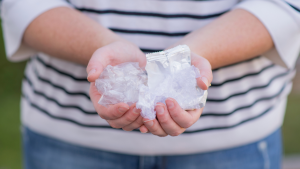
Today, while fast fashion is spreading faster than its name, synthetic microfibres rejected by our washing machines have multiplied. From the depths of the oceans to the top of the mountains, we find these particles everywhere, though tiny but extremely polluting.
Clothing, the forgotten culprits of marine pollution
Certainly, when we think of marine pollution, clothing is not the first culprit that comes to mind. When beaches are cleaned up, usually the waste which is collected is mostly composed of plastic bottles, cups, straws or cigarettes. And yet, one of the biggest culprits of this pollution is clothing made of synthetic textile, nylon, polyester or acrylic. And we love fashion so much that we often tend to forget it.
According to Dr Imogen Napper, each time we wash our clothes “up to 700 000 fibres can come off in the washing cycle”. And they eventually end-up into the marine environment. So, how can we stop this invisible enemy?
Say “bye” to fast fashion
I remember at school when we had to write an essay, someone asked how many pages should we write? “The number of pages doesn’t matter, the quality of content does,” answered the teacher. Well, for clothing it’s the same thing. Indeed, quantity doesn’t matter but quality does. So, we must at all costs avoid making compulsive purchases and favor eco-responsible brands that will have a positive impact on the planet. For instance, you can choose an eco-friendly brand like Hopaal.
In addition, since particles are released during washing, they should not be washed for long and too often. Indeed, it may damage your clothes and therefore force you to buy new ones!
However the machine-washing filter appears to be a solution. It sounds a bit like a filter for coffee. It was invented by a Slovenian start-up and it could prevent 90% of microfibers from ending in the marine environment. “In 5 years, France will avoid 500 tons of microfibers,” says Mojca Zupan, managing director of PlanetCare.
Buy second hand or the “green” solution
For shopping addicts, I guess you already know Vinted. On Vinted, you can find real get that won’t be too expensive. Moreover, by reusing clothes you allow them to stay on the track longer, it’s what we call in other terms the “circular economy”.
However, there are other alternatives for those who prefer to have a lot of clothes. Renting is THE solution for you. This eco-friendly practice is becoming more and more common and convenient for people who don’t want to wear the same clothes or who love to follow the trends and change clothes super often.
Buy less. Choose well. Make it last.
– Vivienne Westwood